
The Art of the Whisper Lock
Ever been told your bassoon has a whisper lock but you have no idea how to use it? Then this is the article for you because bassoonist Zachary Senick will break down all you need to know about utilizing this key in your playing.
What Is a Whisper Lock?
The whisper lock is a small mechanism that holds the whisper key closed against the vent hole on the bocal without having to press the whisper key. You can imagine it like the opposite of an octave key. It is used to enhance one’s low register playing.
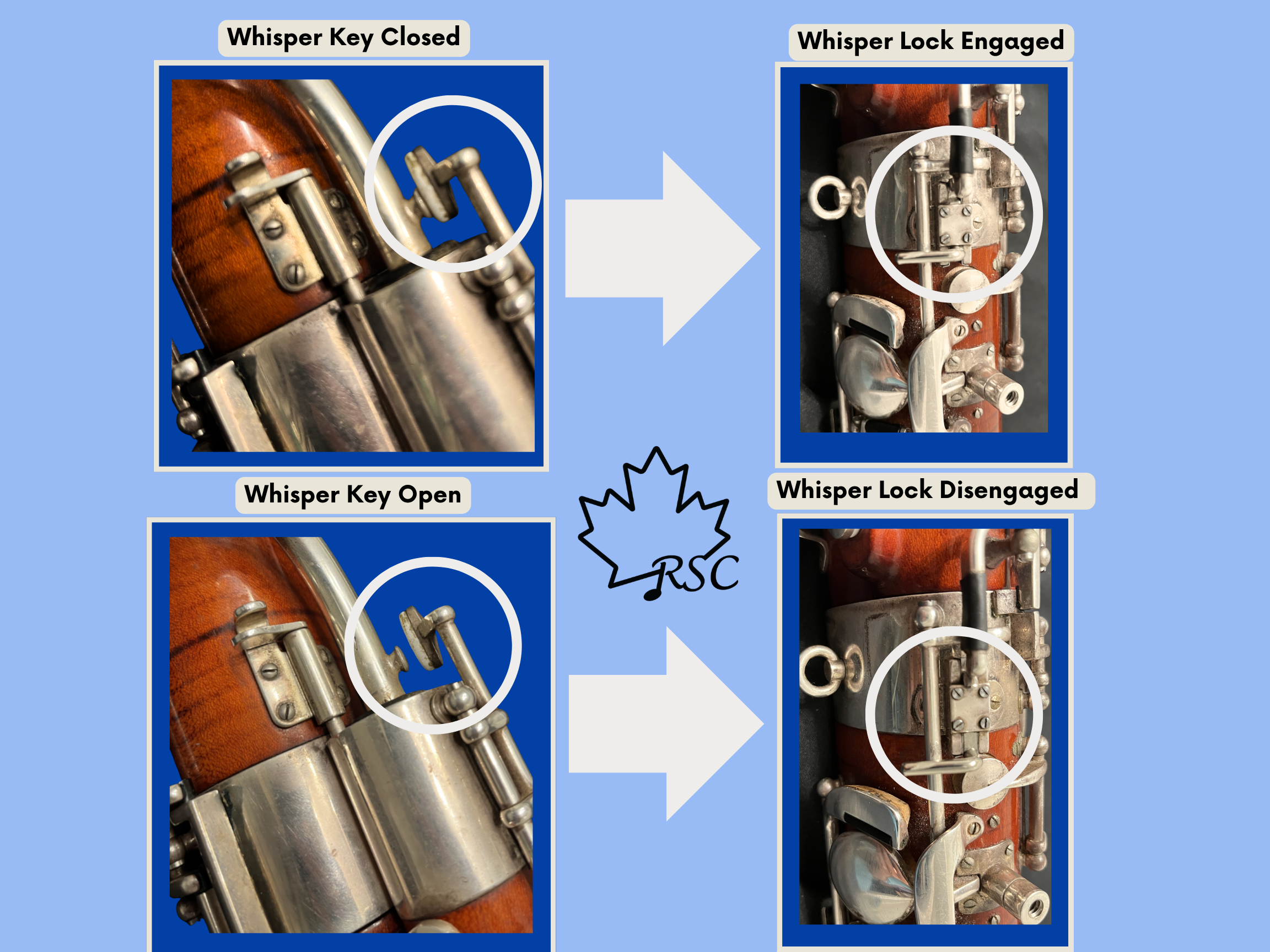
There are three main types of whisper locks based on the model and maker of the bassoon. They will be operated by either the right or left thumb.
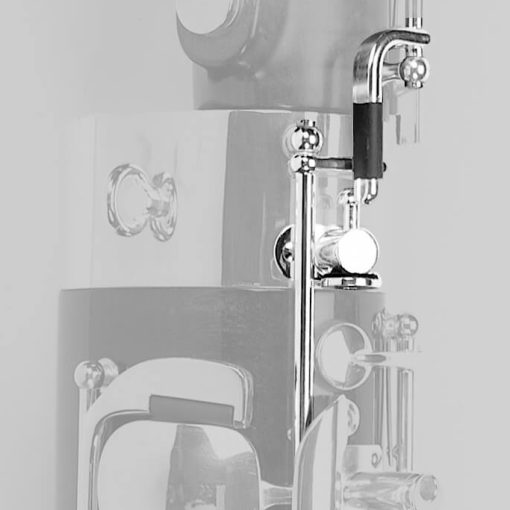
1. Plunger Lock
This mechanism is the most common configuration used on bassoons, especially intermediate models. It is located at the top of the boot joint above the thumb rest and B-flat key. This lock is operated by the right-hand thumb sliding the mechanism up and down. When it is pushed up, this means the key is engaged, locking the whisper key in the closed position.
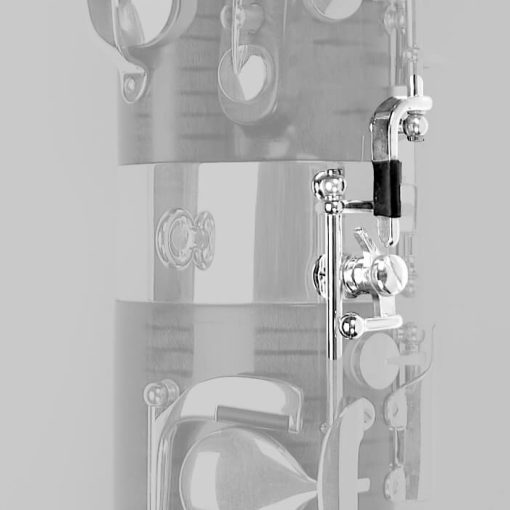
2. Rotary Lock
This lock operates similarly to the plunger lock but is a little smoother to engage and is often found on higher-end bassoons.
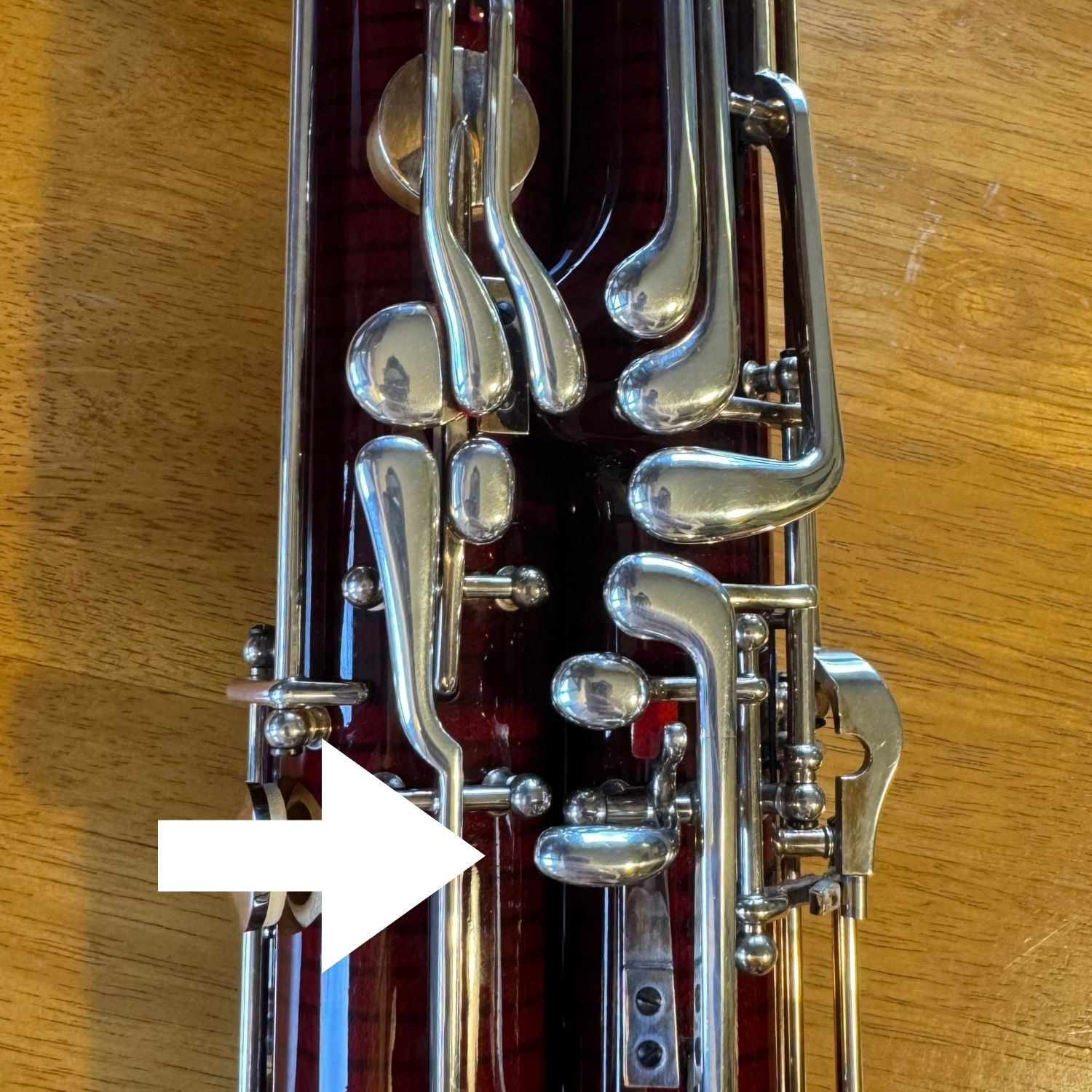
3. Rocker Key
It can be found in the left hand depending on the model of bassoon. This system is operated by the thumb on the left hand by rocking the thumb to push the top part of the mechanism to snap the key down. To disengage the lock the thumb pushes the bottom half of the rocker allowing the mechanism to lift up opening the whisper key.
General Note: Not all bassoons have a whisper lock. You usually only find these on intermediate to professional-level bassoons, but they can also be installed after-the-fact by a bassoon technician. Here are some examples of whisper locks on different brands of bassoons:
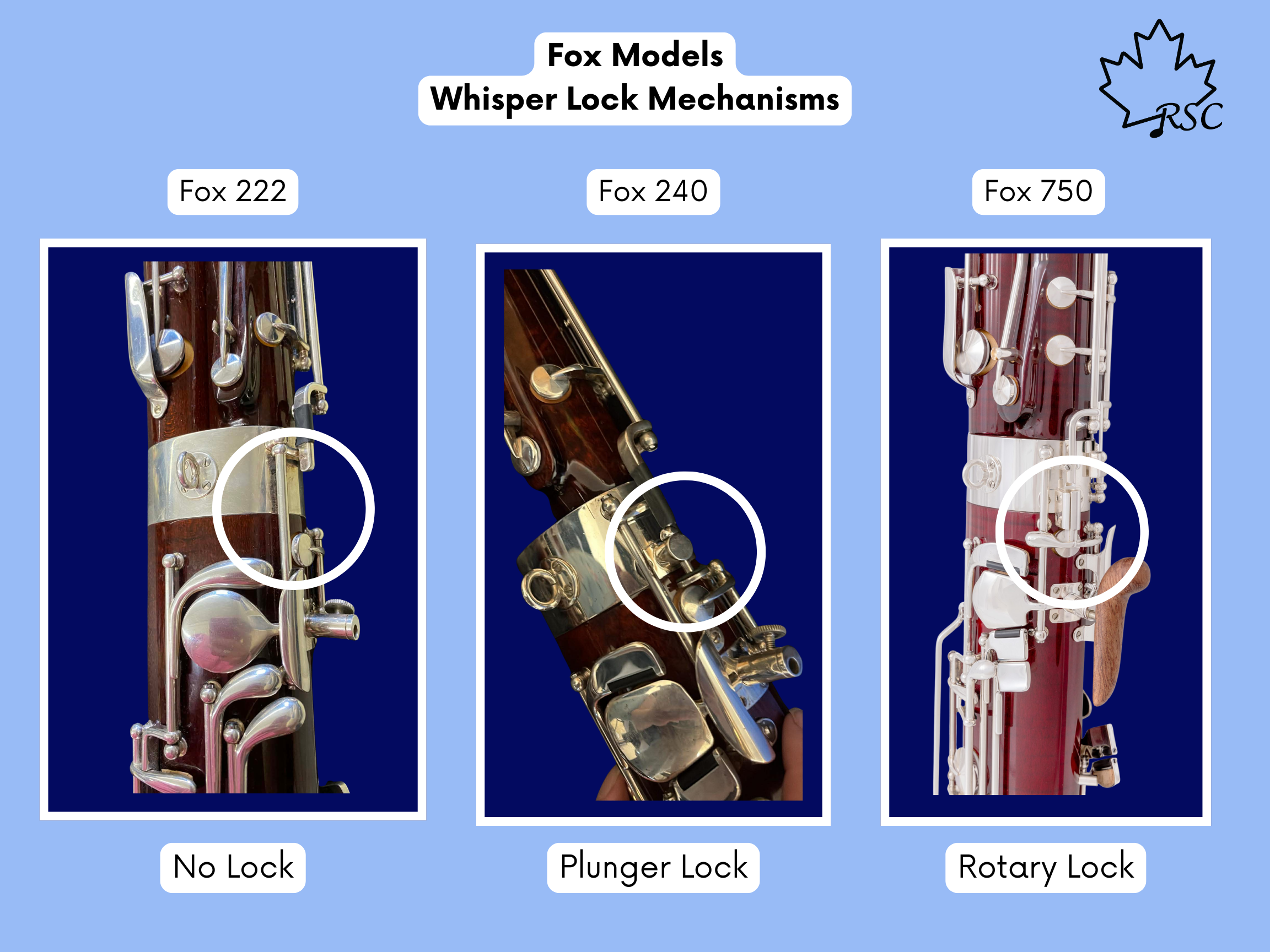
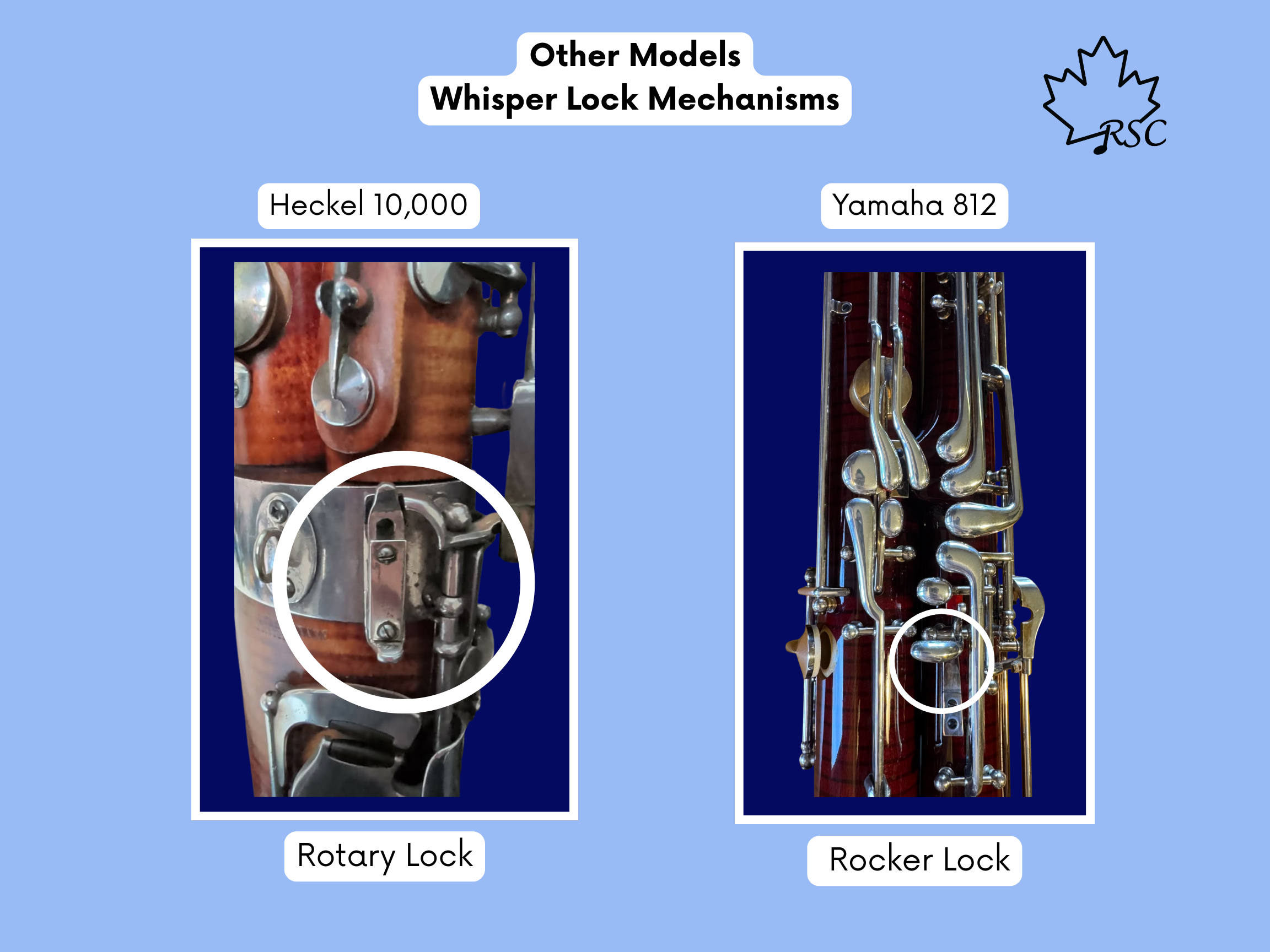
Purpose of a Whisper Lock
The whisper lock is used to help facilitate technical passages in the middle and low registers of the bassoon. By using it, the thumb is free to operate certain keys, such as C-sharp in the staff and low notes, without worrying about coordinating the whisper key into the passage. It will also help facilitate a cleaner legato, more even tone, smoother connection, and prevent cracking between notes in these registers. It is particularly useful for second bassoonists or repertoire that is written primarily below the flick keys.
There is also another mechanism on the bassoon that closes the whisper key automatically without doing anything. When pressing down the Low E or ‘pancake’ key, the whisper key automatically closes, which frees the thumb to play all of the notes below E without having to worry about pressing the whisper key.
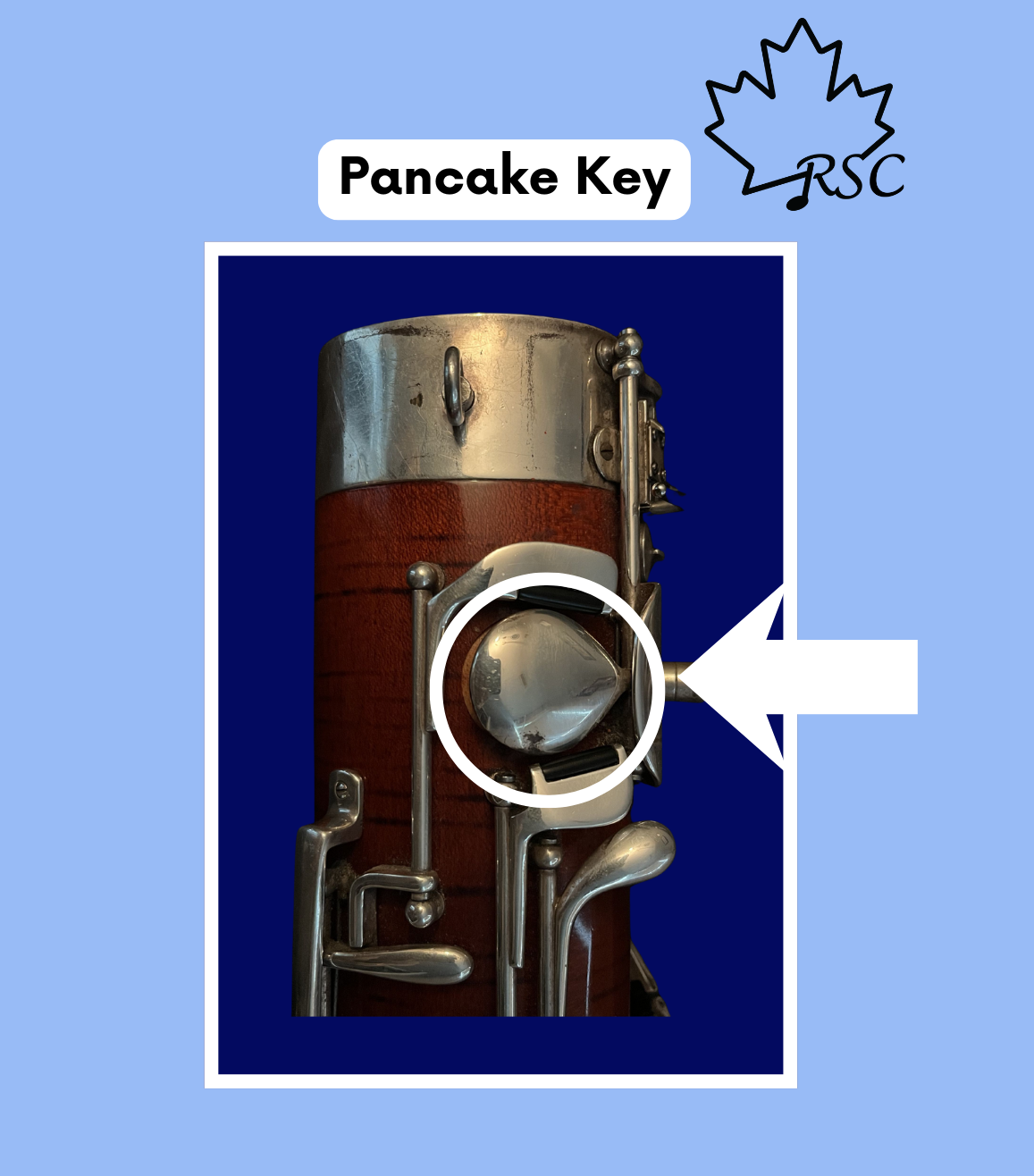
When to Use the Whisper Lock
1. Passages Moving Between the Low and Mid-Range Easier
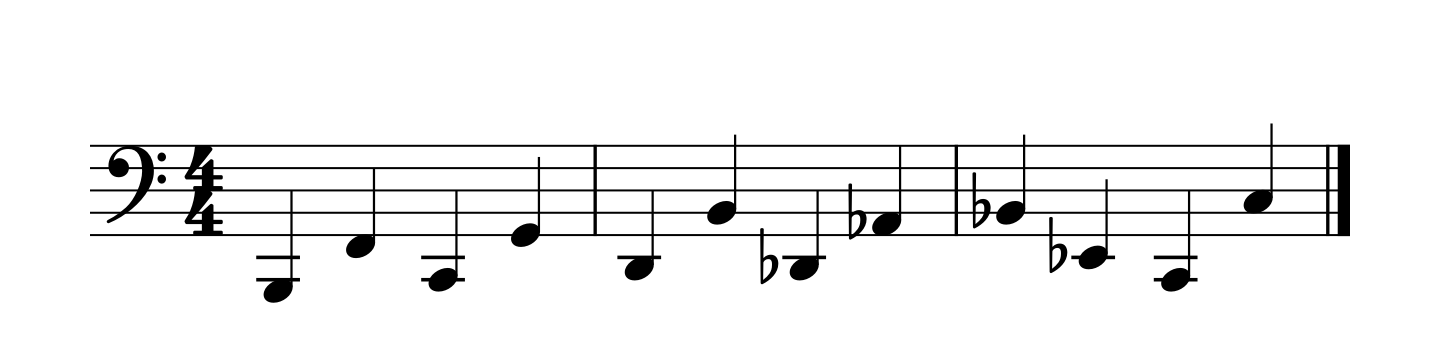
When playing second bassoon in orchestra or band, utilizing the whisper lock can make tricky low note passages much easier by removing the need to coordinate the thumb movement between the whisper key and other thumb keys. Such as jumping from notes on the staff to notes below the staff or vice versa. Basically, any time there are intervals going from below low E jumping to above low E on the staff is a good time to use the whisper lock.
An example of intervals where using a whisper lock makes the passage much easier.
2. Smooth Connection and Legato
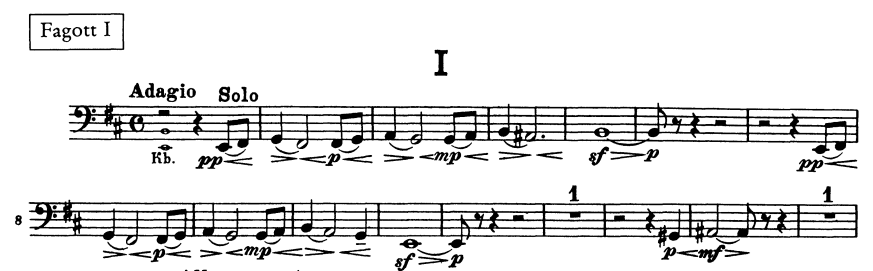
Another great use for the whisper lock is in lyrical passages in the lower and middle register to create a smoother legato and connection between notes where the thumb is moving around. This is especially useful when playing notes going between Low E and above, because this is the point where the whisper key is automatically depressed by the bassoon’s mechanism. It is important to note that when playing Low E or any note lower, a bassoonist does not need to press the whisper key! The bassoon automatically does it for us whenever the pancake key is pressed. Therefore, using the whisper lock when playing a low E followed by notes above allows the bassoonist to avoid any cracking notes when switching from pancake key to whisper key.
An example of this is the solo at the opening of Pyotr Ilyich Tchaikovsky’s Symphony No. 6:
3. Cleaner Technique
The whisper lock can be very useful in passages where there are many alternating C-sharps and D’s in the middle register of the staff. By using the whisper lock, the thumb will not have to jump between pressing the C-sharp key and the whisper key. Instead, the thumb can solely focus on only having to press down the C-sharp. This enables one to be more efficient by creating a faster and smoother technique.
An example of this is the opening of Wolfgang Amadeus Mozart’s Marriage of Figaro:

Note: The whisper lock can still be used on tenor notes (in this example A, A-sharp, and B) where normally the fingering does not use the whisper key in fast technical passages. You will need to adjust your support and embouchure to compensate for this change to ensure the note speaks cleanly without cracking. It is recommended not to use the whisper lock on passages where tenor notes will be held for longer note values.
When Not to Use a Whisper Lock
The whisper lock is best used when there are leaps between the low and middle registers of the bassoon to help facilitate a clean transition. Some scenarios and passages where it is not recommended to use the whisper lock are:
1. Leaps Involving the Tenor Register
It is best to avoid using the whisper lock when the leaps from the lowest register of the bassoon expand up into the tenor register because it will make the upper notes difficult to speak. The whisper lock will interfere with the flicking technique of the tenor notes A, B-flat, B, C, and D, making it difficult for these notes to speak clearly because the whisper key is not opening simultaneously to allow the burst of air from the flicked key to be supported afterward. This will most likely result in the tenor note cracking after the initial attack. The whisper lock will also make the higher tenor notes difficult to speak with full resonance, as the overtones are being muffled without the whisper key opening.
Etude no. 6 from Ludwig Milde’s 50 Concert Studies, op. 26 has passages that are an example of this:


2. All Notes Are Below Low F
When the music stays completely below low F for a passage, there is no need to worry about utilizing the whisper lock because of the mechanism that automatically closes the whisper key when low E is engaged. The bassoon is already designed to handle the whisper key for this register.
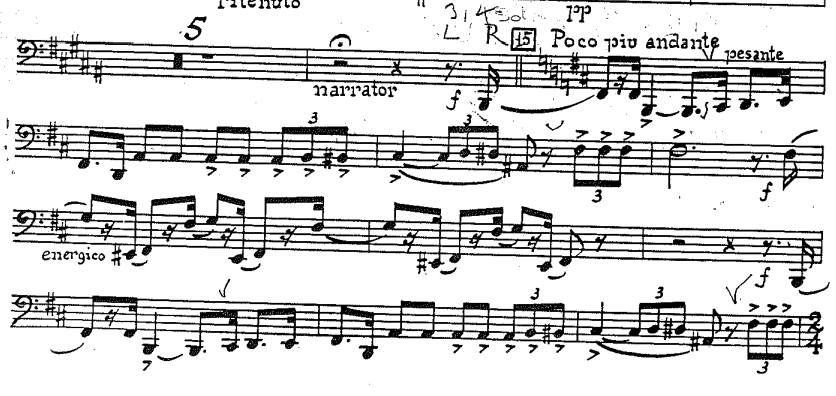
3. Step-wise, Without Any Large Jumps
When the passage is moving in step-wise motion between the registers, there is an adequate amount of time for us to move our thumb back and forth to the whisper key. This means that it is not necessary to worry about coordinating when to engage and disengage the lock.
An example of this is an excerpt from Sergei Prokofiev’s Peter and the Wolf:
Marking Your Music
It is common when first learning to use a whisper lock to forget that it’s engaged and leave it in the “on” position. Be sure to write in your music places to turn the lock on and off.
Often, bassoonists will simply write the phrases “lock on” at the beginning of the passage and then “lock off” at the end of the passage. Another way of notating it is “WK down” and “WK up” or using an arrow instead of the words “up” and “down.” Find a combination or abbreviation that makes sense to you that you can easily and quickly identify in your music. It is important to make sure you will have enough time in the music before and after the passage to facilitate operating the lock.

Also be careful to make sure your whisper lock is not engaged when setting up or putting away your instrument, because the mechanism can catch on the whisper key pad and cause damage to it! When setting up, always check that your lock is disengaged before inserting your bocal.
What If I Don’t Have a Whisper Lock?
Don’t fret if your bassoon does not have a whisper lock on it! A whisper lock is just one tool a bassoonist can make use of to make their life easier. There are ways you can practice to improve your fundamentals to achieve a clean transition between the registers without a whisper lock.
Practice using long tones and jumping between registers, while making small changes to your air speed, support, and embouchure. Figure out what is physically required by a bassoonist to create this clean transition. Also, try practicing slurred arpeggios and slurred octaves to learn how to create a clean technique as you go between the registers. Utilizing a mirror while doing these exercises can be helpful to visualize these changes and notice excess motion in your fingers and face.
It’s Time to Start Using Your Lock
Now that you have learned all about the whisper lock’s location, function, purpose, and potential ideas for when to use it in your playing, go forth and start experimenting with using the whisper lock in different passages to make your life as a bassoonist easier! Do you have any tricky passages in your music and are unsure how to navigate them? Leave a comment or reach out to us for some help.
0 comments