
Method Books and Etudes for Oboe, Explained
Are you a beginner oboist looking for a book to help you learn how to play? Or perhaps you’re an amateur player or university student looking for new etudes to inspire and challenge you? Either way, you’ve come to the right place! In this guide, oboist Anna Betuzzi will help you find the method or etude book that’s the right fit for you, your experience level, and your goals.
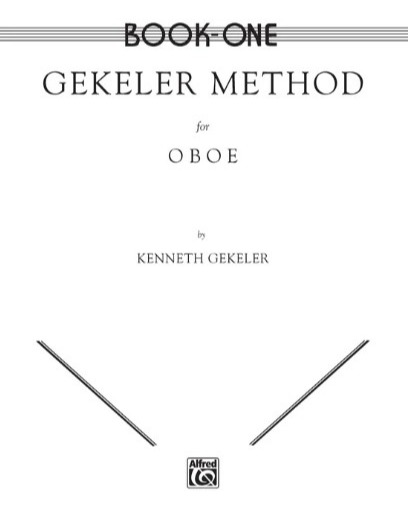
Gekeler Oboe Method, Book 1
Best for: Beginners
The Gekeler Oboe Method, Book 1 is a standard book used by many private oboe teachers for their beginner students. It teaches the fundamentals of oboe playing and how to read music notation in a way that is easy to understand for anyone without prior music experience.
New notes are introduced one at a time, with the fingering provided immediately in the text rather than just in a fingering chart at the back of the book. Rhythms and articulation types are also introduced one at a time, and progress slowly and naturally. Essential concepts such as dynamics, breathing, embouchure, and alternate fingerings are explained in depth.
This book can be used by anyone starting the oboe for the first time. If you take private oboe lessons (and we highly recommend that you do!), then your teacher will work through this book with you, and give you practice techniques so you can learn to play the exercises to the best of your ability. You can also use this book to complement any band method book assigned by your band teacher, as it will give you more oboe-specific information.
If you are a beginner with no prior music experience, this is the book for you!
What about Gekeler Book 2?
Gekeler Book 2 is the natural continuation of Book 1, building on concepts including articulation and musicality through melodies that gradually increase in complexity. Anna recommends that you consult with your private teacher before purchasing Book 2. Many of the melodies from Book 2 are borrowed from the Barret Oboe Method (which is a larger, more thorough volume), so your teacher may wish you to skip straight to the Barret Method.
However, if you aren’t ready to commit to the full Barret Method, Gekeler Book 2 is a more accessible choice. Plus, it does have some unique melodies that can’t be found in the Barret book!
Essential Elements for Band
Best for: Beginner Band Students
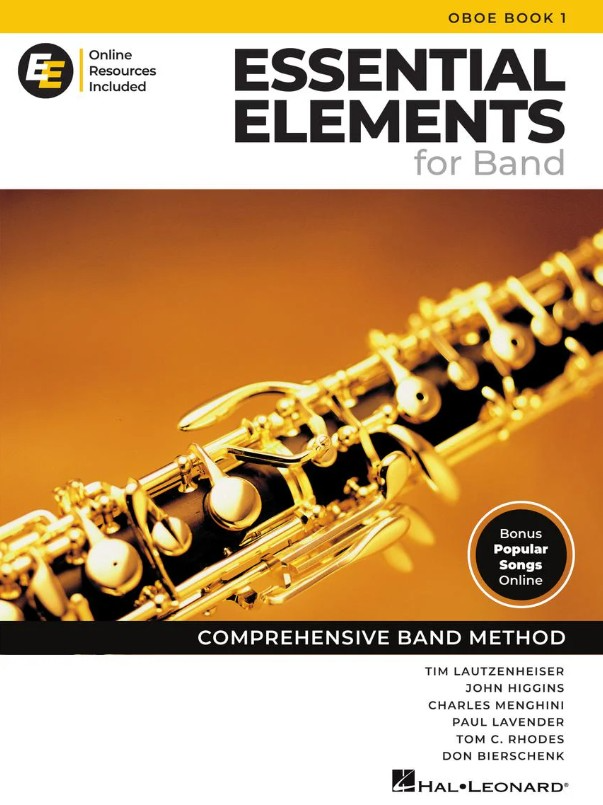
Essential Elements for Band is one of the most commonly used band method books. It contains a progressive series of exercises and familiar melodies that can be played both individually and together with a concert band ensemble.
It teaches all the basics of music, including notes, rhythms, dynamics, tempo markings, and articulation, with pacing perfect for the classroom environment.
Using a band method book does require that all members of the band use their instrument’s respective book from the same series (in this case, Essential Elements).
But learning to play music as a member of a band can be an engaging, exciting, formative experience. Playing music with other people is one of the most rewarding parts of being a musician, and it can be a great motivation to practice as well.
If you are a beginner and a member of a band, this is the book for you!
Are you a parent of a young band student? Check out our Oboe and Bassoon Parent Survival Guide!
80 Graded Studies for Oboe Book 1 and Book 2
Best for: Serious Beginners and Intermediate Students, respectively
The 80 Graded Studies for Oboe, Book 1 and Book 2 offer a progressive series of studies arranged in order of increasing difficulty. By presenting technical challenges in a musical context, they help the student become technically proficient while keeping learning enjoyable and musically rewarding.
These books have a slightly steeper learning curve compared to other method books, so if you have no musical experience, we recommend starting with a method book such as Gekeler Book 1 or Essential Elements for Band before moving on to the 80 Graded Studies. However, if you do know how to read music (for example, if you already play another instrument), these books could be a great fit.
Either way, we recommend signing up for lessons with a private oboe teacher, as this will exponentially increase your progress!
If you’re a serious student who is taking private lessons (or is interested in taking private lessons), or if you play another instrument and are now learning oboe, these next books are for you!
Collections of Oboe Solos
Best for: Beginner and Intermediate Students, and students who want to play songs right away
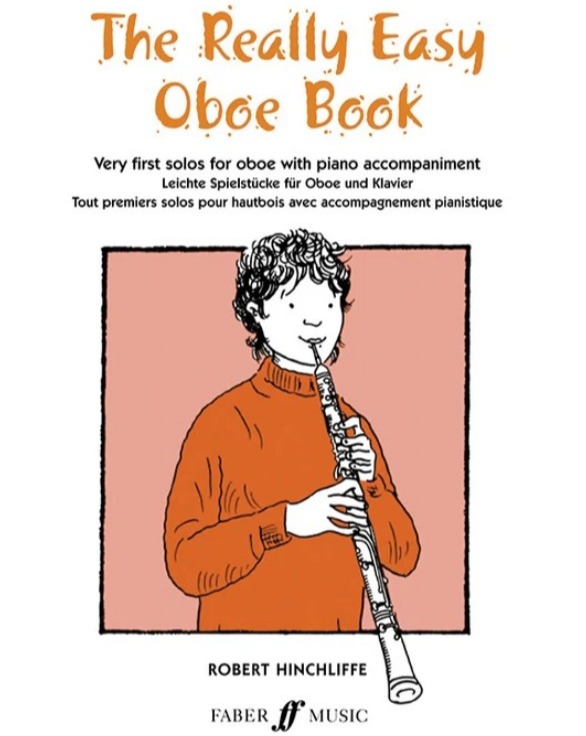
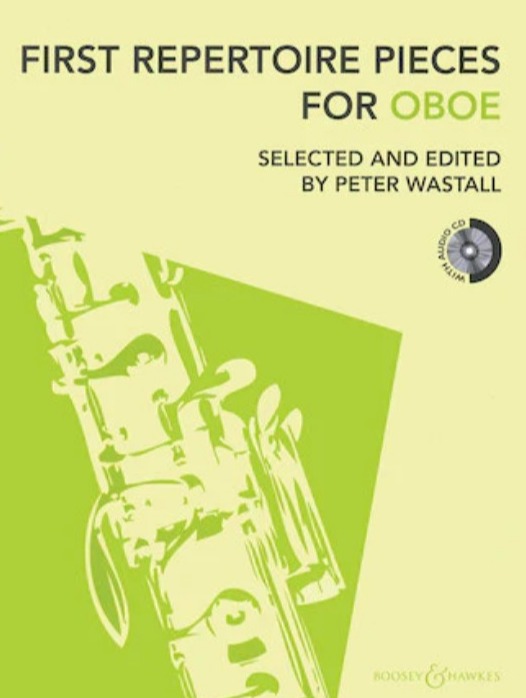
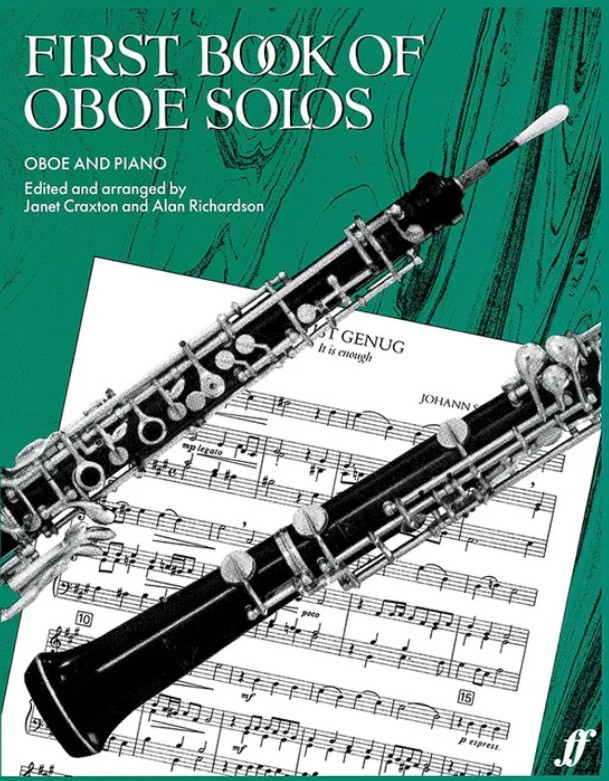
There are a huge variety of solo music collections available on the market, for both oboists and for musicians in general. These books offer a selection of melodies aimed at a certain experience level, such as beginners or intermediate students. Many contain piano accompaniment and/or backing tracks, which gives the student an excellent opportunity to start performing early!
Playing melodies that are intended for performance can be a huge motivation to practice. Some students also (understandably) have a hard time focusing on technical exercises, as those exercises are often very dissimilar from the music the student truly wants to play. Playing solo melodies remedies all this.
While these solo collections are great motivation to further your learning, be aware that you will need to have basic knowledge of music notation, oboe fingerings, and rhythm to play the solos, as the books are not intended to teach you how to read music.
Anna recommends pairing an Oboe Solos Collection book with a method book (such as Gekeler Book 1 or 80 Graded Studies Book 1). That way, you can learn to read music, then use that knowledge to play the solos, therefore giving you a more enjoyable experience!
Are you a beginner or intermediate student who knows (or are learning) the basics of reading music, and wants to play songs right away? Then a Collection of Oboe Solos is a great book for you!
Here are just some of the Oboe Solo Books we carry:
Barret Oboe Method
Best for: Intermediate Students, and anyone who wants to study oboe at university
The Barret Oboe Method has been fundamental to oboe pedagogy for centuries. If you ask any professional oboist what method book they used during their studies, most will answer “Barret, of course!” It’s essential for any serious oboe player.
This method book is extremely thorough, and contains sections including Articulation Exercises, the famous Forty Progressive Melodies (which is the most commonly studied section), Sonatas, Grand Studies (which are longer etudes for advanced study), as well as excerpts from Apollon Barret’s preface to his original 1862 publication. The Forty Progressive Melodies, Sonatas, and Grand Studies also contain accompanying bass lines, which are essential for understanding the harmonies of the oboe part. These bass lines can also be used as a duet if you have a friend who can read the bass clef!
The Forty Progressive Melodies are exactly as one would expect: 40 melodies that gradually increase in complexity. They cover most major and minor keys, as well as a huge variety of articulation patterns, dynamics, rhythms, time signatures, tempi, and styles. Anna recommends these melodies to anyone who can read music already and is looking to improve their oboe playing exponentially.
This book is essential if you are an intermediate student, an amateur who knows how to read music and is looking for a rewarding challenge, or someone who is seriously considering studying oboe at university.
Ferling 48 Studies for Oboe
Best for: Advanced Students/Amateurs and University-Level Students
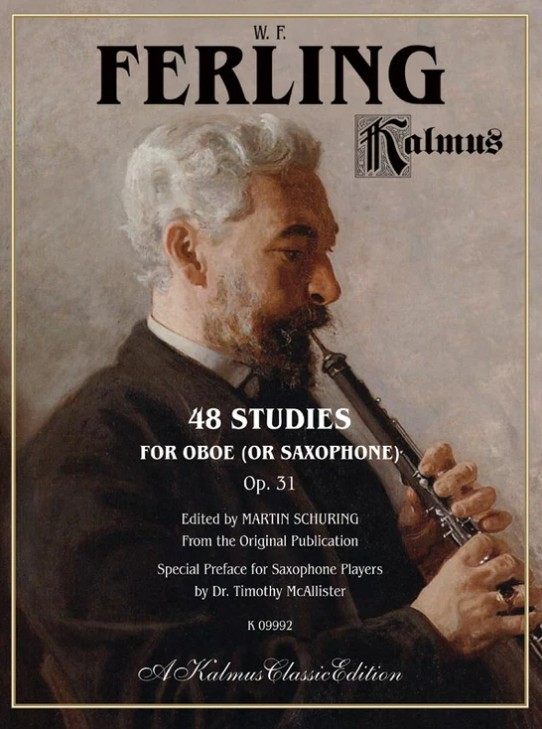
Ferling 48 Studies for Oboe is a collection of studies regularly used in university-level pedagogy. It contains one slow study and one fast study for every single major and minor key, and is an excellent book for developing your rhythm, technique, intonation, and musicality.
The slow studies all contain a huge variety of rhythms, which is excellent for developing a sense of internal pulse. They are also great for developing endurance, dynamic range, intonation, and overall musicality.
The fast etudes present technical challenges, and can be a great opportunity to create musical phrases out of ‘a bunch of fast notes.’
Basically, any skill that you would like to develop, you can use the Ferling etudes to help you develop it!
Are you an intermediate to advanced student looking for a challenge, or are you studying oboe at university? Then this book is for you!
Additional Etudes for University Students
Best for: Students Studying Oboe at University
Are you studying oboe at university, and looking for some new repertoire to inspire you and challenge you? Check out these etudes!
Brod, Luft, and Salviani Etudes:
These etude collections are an excellent and effective way to improve your technique. Each collection presents a variety of technical challenges in a variety of keys, therefore preparing you for the demands of solo, chamber, and orchestral repertoire. Incorporate some of these etudes into your practice routine to see steady improvement in your technique!
Silvestrini, 6 Etudes for Oboe
These pieces by Gilles Silvestrini are entitled Etudes, however they are actually intended as solo performance repertoire. Each of the 6 etudes is a reflection of a famous Impressionist era painting, and employs a variety of sound-painting techniques to evoke the mood of its respective painting.
You will often hear these etudes programmed at solo recitals or performed online. They are extremely technically demanding; requiring mastery of nearly the full range of the instrument, exceptional dynamic range, breath control, and of course, technique.
Despite the technical challenges of the etudes, they are incredibly evocative and full of character. Give them a listen, and challenge yourself to learn one that inspires you!
Morris Collision Etudes
Alyssa Morris composed Collision Etudes as a response to Silvestrini’s etudes. The Collision Etudes is a collection of 6 etudes that are also intended as solo performance repertoire. Each etude of the Collision Etudes reflects a painting by a female American painter.
Using extended techniques, the full range of the oboe from high A to low B flat, jazz influences, and a full range of emotional expression, the Collision Etudes are as technically demanding as they are evocative. Give them a listen, and challenge yourself to learn one that inspires you!
Gillet Studies for the Advanced Teaching of the Oboe
This collection of 25 etudes by Georges Gillet is one of the most technically difficult etude collections ever written for the oboe. While not intended for public performance, they do present advanced oboists with nearly every technical challenge possible on the instrument. Each etude includes helpful study recommendations on how best to approach the etude. If you are looking to challenge and grow your technique to its limits, give these etudes a try!
Conclusion
I hope you enjoyed this article, and have discovered one or two new etude or method books to try that are suited to your level, needs, and goals!
For some practice techniques on how best to learn your etudes and method book exercises, check out our articles on How to Start Your Practice Session and How to Learn Repertoire Effectively!
0 comments